Why Aluminum Casting Is Perfect for High-Volume Manufacturing Runs
Aluminum casting has arised as a leading choice for high-volume production runs. Its lightweight nature and effective automation abilities add to lower prices and enhanced shipping performance. Additionally, progressed technologies in aluminum casting enable for detailed designs and high accuracy, lowering the requirement for considerable machining. As producers look for means to optimize their production procedures, understanding the full extent of aluminum casting's benefits becomes necessary. What various other benefits does this technique deal?
Benefits of Aluminum in Casting
Aluminum, usually recognized for its light-weight residential properties, uses substantial benefits in the casting procedure. Its reduced thickness not just decreases weight yet also enhances fuel efficiency in applications such as automotive parts. The superb thermal and electrical conductivity of aluminum makes it perfect for different industrial applications, permitting effective heat dissipation and improving performance in electric systems.
Furthermore, aluminum displays great rust resistance because of the formation of a protective oxide layer, which extends the lifespan of cast parts. This sturdiness is especially advantageous in outside and harsh atmospheres. The alloying capabilities of aluminum also boost its properties, enabling the production of tailored options customized to particular requirements. In addition, aluminum can be cast right into intricate forms with high dimensional accuracy, lowering the requirement for extensive machining - Aluminum Casting. Jointly, these characteristics placement aluminum as a favored material in casting, particularly for high-volume production runs
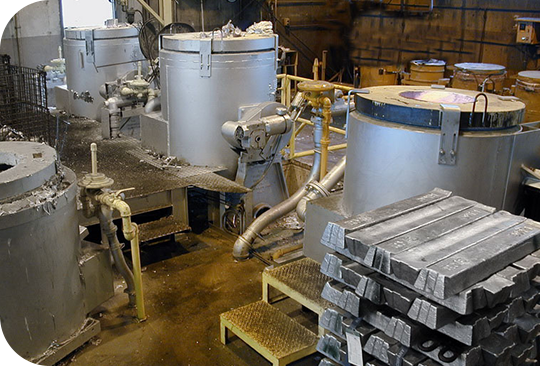
Performance in Production Procedures
Efficiency in manufacturing processes is crucial for optimizing the advantages of aluminum casting in high-volume manufacturing. By lowering cycle times and integrating streamlined operations, manufacturers can improve performance and minimize downtime. This concentrate on performance not only speeds up result but likewise adds to cost-effectiveness in manufacturing operations.
Lowered Cycle Times
Improving manufacturing processes considerably lowers cycle times in aluminum casting. This effectiveness originates from the adoption of sophisticated technologies and approaches that enhance each phase of production. Automated systems, such as computer-controlled machines and robotic arms, enhance precision and speed, minimizing manual intervention. Additionally, the use of efficient mold styles and materials enables quicker cooling and solidification, minimizing the moment required for every casting cycle - Metal Casting. The assimilation of real-time monitoring systems enables manufacturers to quickly identify and rectify issues, preventing delays. As an outcome, much shorter cycle times bring about raised throughput, permitting business to meet high-volume production needs while keeping high quality requirements. Ultimately, this efficiency in manufacturing procedures settings aluminum casting as a superior selection for large manufacturing
Streamlined Operations Assimilation
In contemporary manufacturing, a well-integrated operations can substantially improve efficiency in aluminum casting operations. By optimizing each stage of production-- from layout and mold and mildew creation to the casting procedure and ending up-- producers can minimize hold-ups and minimize expenses. Executing advanced software program services and automated machinery helps with real-time monitoring and changes, making certain that every facet of manufacturing operates efficiently. This combination not just improves interaction between divisions but additionally promotes cooperation, resulting in quicker analytic and advancement. Additionally, a natural process permits better source monitoring and supply control, decreasing waste and increasing total efficiency. The result is an extra active production atmosphere that can reply to market demands promptly, making aluminum casting an optimal selection for high-volume production runs.
Cost-Effectiveness of Aluminum Casting
While different making approaches exist, aluminum casting stands apart as a cost-effective service for high-volume manufacturing. This method enables for reliable mass manufacturing, greatly decreasing the expense per device. The initial setup costs are commonly countered by the quick manufacturing rates achieved during the casting procedure. Aluminum's light-weight nature additionally adds to lower shipping and dealing with expenses, in addition enhancing its economic advantages.
Furthermore, using aluminum casting lessens product waste contrasted to typical machining approaches, as excess product is usually reused within the production cycle. The toughness and long life of aluminum parts lower the demand for frequent replacements, converting right into long-term financial savings for producers. In enhancement, the capability to create elaborate parts in a solitary procedure gets rid of the need for numerous production stages, streamlining procedures and reducing labor costs. Overall, aluminum casting offers an economically viable alternative for services aiming to scale their manufacturing effectively.
Design Adaptability and Complexity
Although many making processes enforce restrictions on design, aluminum casting uses amazing flexibility that fits complex geometries. This flexibility enables designers and designers to develop elaborate forms and functions that would certainly be tough or difficult to accomplish via other techniques. The liquid nature of molten aluminum allows it to load comprehensive mold and mildews, capturing great information and complicated frameworks effortlessly.
Furthermore, aluminum casting sustains a series of design adjustments without substantially enhancing production expenses. This is specifically advantageous for high-volume production runs, where modifications can be made to fulfill specific customer demands or style improvements. The capacity to generate lightweight yet resilient elements adds to total item efficiency and performance. As sectors significantly require cutting-edge layouts, the design flexibility inherent in aluminum casting positions it as a leading choice for producers seeking to balance complexity with production performance.
Ecological Advantages of Aluminum Casting
Aluminum browse around here casting presents substantial ecological advantages, especially with its ability to decrease waste and energy consumption throughout manufacturing. The procedure uses recycled aluminum, which requires only 5% of the power required to create main aluminum. This conservation of energy brings about a reduced carbon footprint, adding to a more lasting production ecological community.
Moreover, aluminum casting creates less by-products and scrap compared to various other metalworking techniques, reducing landfill waste. The high recyclability of aluminum more improves its environmental qualifications, as it can be remelted and recycled indefinitely without derogatory high quality.
Additionally, aluminum's light-weight nature enhances fuel effectiveness in transportation, lowering greenhouse gas exhausts connected with logistics. As industries significantly prioritize sustainability, aluminum casting stands out as a liable choice, straightening with worldwide initiatives to minimize ecological effect while fulfilling the demands of high-volume manufacturing. In general, aluminum casting exhibits a commitment to eco mindful production practices.
Applications Throughout Various Industries

In addition, the customer electronics industry employs aluminum casting for rooms and warm sinks, making sure durability while maintaining aesthetic appeal. In the construction sector, aluminum castings are used for architectural elements and structural parts, supplying both capability and layout versatility.
In addition, the clinical devices market relies on aluminum castings for making tools click over here now that call for accuracy and hygiene. In general, aluminum casting's flexibility and efficiency make it an integral procedure throughout many markets, meeting the needs for high-volume manufacturing while keeping high quality and performance.
Frequently Asked Inquiries
Exactly How Does Aluminum Casting Compare to Various Other Products?
Aluminum casting offers advantages over various other materials, such as lightweight toughness, rust resistance, and excellent thermal conductivity (Metal Foundry). These properties make it better for different applications, especially where longevity and performance are paramount in manufacturing processes
What Are the Typical Lead Times for Aluminum Casting Projects?
Normal continue reading this lead times for aluminum casting tasks range from 2 to six weeks, relying on elements such as intricacy, mold prep work, and production quantity. Effective procedures can significantly lower these times for high-demand manufacturing demands.
Can Aluminum Casting Be Recycled After Use?

What Kinds Of Defects Can Happen in Aluminum Casting?
Typical issues in aluminum casting consist of porosity, shrinkage, misruns, and inclusions. These problems can develop from inappropriate mold and mildew design, inadequate pouring methods, or inaccurate temperature level control, possibly influencing the mechanical residential or commercial properties and general high quality of the casting.
Exactly How Is Quality Assurance Managed in Aluminum Casting?
Quality assurance in aluminum casting is taken care of via rigorous evaluations, adherence to market criteria, and the implementation of real-time monitoring systems. These practices guarantee consistency, minimize defects, and keep high-quality production throughout the production procedure.
As suppliers look for methods to enhance their production processes, understanding the complete extent of aluminum casting's benefits ends up being vital. Effectiveness in production processes is crucial for maximizing the advantages of aluminum casting in high-volume production. Enhancing production procedures substantially minimizes cycle times in aluminum casting. The process utilizes recycled aluminum, which requires just 5% of the energy needed to generate main aluminum. As industries significantly focus on sustainability, aluminum casting stands out as an accountable choice, straightening with worldwide efforts to lower environmental impact while fulfilling the demands of high-volume manufacturing.
Comments on “How Aluminum Casting Simplifies Complex Prototype Manufacturing”